Report to: Housing Advisory Board
Date: 18th September 2025
Agenda item: 5c – Your Voice Scrutiny Group Report – Resident Engagement
Report prepared by: Your Voice Scrutiny Group
Intended outcome: Board assurance
1. Title of Scrutiny Review
Does MCC Housing Services current Resident Engagement provide the best service and fulfil their vision of “Resident led services – putting you at the heart of everything they do”?
2. Date of Report
28th September 2025
3. Scrutiny Panel Members
Chris Higham (Chair), Christine Leyland (Vice Chair), Mary Cowell, Eleanor Atta, Lorna Holden, Kathryn Burke, Marvalyn Green, Debbie Stephens, Independent mentor: Safeena Rather
4. Scope and Objectives
Scope
The scrutiny focuses on evaluating the effectiveness and inclusivity of MCC Housing Services’ current resident engagement practices. It covers:
- The range and quality of engagement opportunities offered to residents.
- How well these opportunities reflect the service’s vision of being “resident led.”
- The communication channels used to engage residents (e.g., surveys, social media, direct contact).
- The use of data and feedback to shape services.
- The allocation and impact of the resident engagement budget.
- Internal collaboration between teams involved in resident engagement.
Objectives
- Assess Alignment with Vision
Determine whether current engagement practices truly reflect the vision of “putting residents at the heart of everything.” - Benchmark Against Best Practice
Compare MCC Housing Services’ engagement offer with other housing providers to identify strengths and areas for improvement. - Gather Resident Feedback
Understand residents’ views on how well they are engaged and whether they feel heard and involved. - Evaluate Internal Processes
Review how different teams contribute to engagement and how effectively they work together. - Inform Future Improvements
Provide evidence-based recommendations to enhance resident engagement and ensure it is inclusive, effective, and meaningful
5. Methodology
The Resident Engagement Scrutiny Action Plan, created by the Scrutiny Group, is a structured action plan designed to assess whether MCC Housing Services' current resident engagement practices align with their vision of “Resident led services – putting you at the heart of everything they do.”
It outlines a series of targeted actions, each with assigned responsibilities, timelines, resources, and potential barriers. These include summarising the current engagement offer, benchmarking against other housing providers, analysing existing survey data, creating new surveys to gather resident feedback, and engaging with key internal teams such as Communications and Housing Officers.
It also involves reviewing the resident engagement budget to evaluate its effectiveness. The outcomes of these actions aim to provide measurable evidence of success and inform future improvements in resident engagement.
This document can be found in the appendices. (Appendix 1)
6. Findings
What does MCC Housing Services offer in terms of Resident Engagement?/ What do other social landlords offer in terms of Resident Engagement?”
What Does MCC Housing Offer?
MCC Housing provides a wide range of engagement opportunities. The Your Voice Scrutiny Group meets monthly to review services and suggest improvements. The Reading Group gives feedback on policies and documents on an ad hoc basis. The Service Excellence Group invites residents to discuss complaints and identify service failures. A bi-monthly High Rise Forum supports tenants in high-rise buildings. The Your Voice Forum offers monthly themed discussions open to all residents. Estate walkabouts allow residents to raise local issues directly with staff. Other engagement tools include an opt-in resident newsletter, active Instagram and Facebook pages, transactional surveys following repairs or interactions, and an annual satisfaction survey.
MCC also hosts resident events such as summer fun days, maintains a website, supports community partnerships, runs digital inclusion sessions, attends Greater Manchester Tenants Union meetings, supports Tenants and Residents Associations, and gathers feedback through surveys and leaflets at housing office receptions.
Despite this broad offer, engagement remains low. Many residents still associate services with Northwards Housing and feel little has changed. This is reflected in low attendance at Your Voice forums and negative feedback on Facebook. Conversations with residents suggest a lack of trust and a belief that “there’s no point, they don’t listen.”
What Do Others Offer?
Wigan Council, which manages around 22,000 homes, presents its engagement offer under the banner “Volunteer with Us”, which may be more appealing to some residents.
It endorses a sense of purpose and organisation, which may be lacking from the current MCC offer.
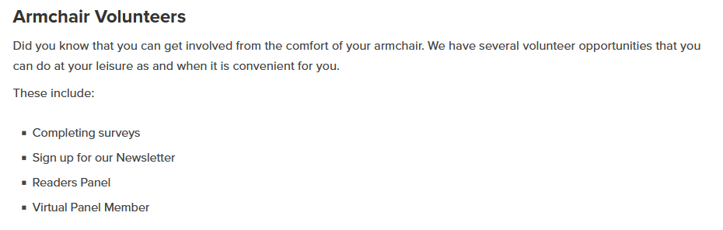
“Love how they frame this, making it clear that residents can get involved with little effort or time, therefore removing a potential barrier”
For a breakdown of benchmarked landlords, see Appendix 2
6.1 Comparison with Other Landlords
A detailed review of four local authorities and one housing association was carried out to compare their resident engagement with MCC Housing. While there were some similarities, several distinct services stood out. These included:
- a Youth Panel (18–25)
- Youth Voice (11–21)
- Sheltered Voice
- a Screen Team focused on communications
- a Resident Newsletter
- a Home Panel covering repairs, health and safety, and quality standards
- a virtual community map
- an Editorial Panel reviewing council communications, and;
- a High-Rise Champion role.
6.2 Analysis of Existing Survey Data
Resident Engagement Surveys: September 2024 – March 2025
Between September 2024 and March 2025, two surveys were conducted to assess resident satisfaction and perceptions of engagement: the Tenant Satisfaction Measures (TSM) and the Key Performance Indicators (KPIs).
Tenant Satisfaction Measures (TSM)
1,823 residents responded, drawn from 15,192 properties. This included 1333 MCC Housing residents, 88 from Tenant Management Organisations (TMOs), and 402 from Private Finance Initiative (PFI) properties. Two questions focused on engagement.
When asked if they were satisfied that the landlord keeps tenants informed of things that matter to them 58% of responded positively. This marks an 11% drop from 69% satisfaction in 2023–24.
On whether the landlord listens to tenants’ views and acts upon them, 54% of respondents were satisfied. This marks a 10% drop from 64% satisfaction in 2023–24.
Respondents were from a range of ethnic backgrounds and age bandings. These can be broken down as follows:
|
Ethnicity |
% of Respondents |
|
Age |
% of Respondents |
|
Asian or Asian British |
5.6% |
|
16 to 24 |
0.6% |
|
Black or Black British |
14.6% |
|
25 to 34 |
7.7% |
|
White |
56.7% |
|
35 to 44 |
19.2% |
|
Mixed or multiple Ethnic groups |
5.5% |
|
45 to 54 |
23.6% |
|
Other Ethnic group |
1.8% |
|
55 to 64 |
19.5% |
|
Prefer not to say/ no data |
15.9% |
|
65 and over |
29.4% |
Key Performance Indicators (KPIs)
365 residents completed a survey about the Key Performance Indicators for 2025/26.
When asked if they thought MCC Housing Services told them enough about how they were performing. Just over 41% of respondents said Yes, and 59% said No. This is despite there being a regular quarterly update on MCC Housing Services website and ‘calls to action’ in the Residents Newsletter, which prompts readers to view performance figures.
In addition, performance information is published in their Annual Report, the Annual Complaints and Service Improvement report, on the TSM page and on Social Media (such as the current communication campaign to raise awareness of improvements to call waiting times).
Resident Feedback on Engagement
Positive feedback highlighted helpful staff and appreciation for being asked to contribute. However, several concerns were raised. Residents wanted clearer, more frequent updates especially regarding repairs and ongoing projects.
Some respondents found it difficult to contact the council by phone and felt complaints had not been properly addressed. There were also calls for greater transparency around performance and project updates, and for more accessible engagement options.
Suggestions for improvement included email and text updates, regular newsletters, community meetings, forums, and noticeboards in communal areas.
6.3 Findings from interviews with MCC Housing Services Resident Engagement Officers
Engagement Methods
Engagement is delivered through six constituted resident groups, community clean-ups, skip days, gardening clubs, and events supported by officers Ian and Louise. Communication is via flyers, emails, and a network of around 100 community champions. Youth engagement, previously supported through Urban Crew and outreach, has been scaled back due to budget and staffing cuts. Methods are tailored to local demographics for example, older residents are engaged through VE Day events and gardening clubs.
Resident Participation
Participation is encouraged through flyers, emails, and inclusive events. Residents like “Debbie” help connect with local groups. Training is available for roles such as chairing and treasury, though awareness is limited. In areas without active groups, such as Cheetham Hill, events still take place. Partnerships with community figures, like Mohammed from the mosque, help reach underrepresented groups. Plans include using a trailer to identify and support more community connectors.
Feedback Collection
Feedback is gathered face-to-face at events, through surveys (with targeted outreach in low-response areas), and via social media. Common concerns include repairs, anti-social behaviour, and environmental issues such as litter and fly-tipping. Many residents believe the council is solely responsible for these issues, indicating a need for a more collaborative approach.
Inclusivity and Accessibility
Venues are checked for accessibility, and childcare expenses can be claimed for meeting attendance, though this is not widely known. At Dam Head, a resident funds a speaker to support inclusivity. Engagement also extends to faith groups, youth clubs, food banks, and schools to reach underrepresented communities.
Impact and Outcomes
Impact is measured through annual reports, feedback from partners like the fire brigade and police, and direct resident input. At Dam Head, resident-led events have increased from two to four per year, showing positive outcomes.
Challenges and Solutions
Key challenges include cultural and language barriers, resident apathy, youth disengagement, and a belief that feedback is ignored. Successful strategies include partnering with existing community events (e.g. mosque gatherings) and collaborating with other teams to reduce costs and extend reach.
Resident Involvement in Planning
Residents contribute through tenant and resident groups and by identifying local issues. Officers support these efforts and help implement solutions. Residents also lead or co-create events, such as the Dam Head summer event and Mirfield gardening projects.
Communication and Outreach
Engagement opportunities are promoted via social media, websites, posters, flyers, word of mouth, and reception TVs. Flyers are the most effective method, though also the most resource intensive. A5 posters in windows and shops are also used.
Training and Support
Training is available for chairing and treasury roles, with support from TPAS. However, awareness of wider training or confidence-building workshops is limited.
Future Plans
An “Engagement Offer” booklet is being developed to clarify available support and opportunities. Budget constraints remain a major barrier, with the engagement budget unchanged for eight years (£25k, of which £18k is allocated to summer events).
Additional Insights
Officers noted the need for a scheme manager on every site to address dissatisfaction. Some groups resist becoming constituted, limiting formal engagement. Funding and staffing limitations restrict innovation. The Urban Crew project has reduced significantly, from 42 to 12 schools. There is also a perception that engagement is not a shared responsibility across the wider team.
6.4 Resident Engagement Budget – Interview
A meeting was held with Ferri Brown, Head of Resident Experience and Engagement, to review the current structure and effectiveness of the Resident Engagement Budget.
Budget Overview
The annual allocation for the Resident Engagement Budget is £25,000, a figure that has remained unchanged in recent years. Of this, £18,000 is designated for the events programme, with the remaining £8,000 allocated to other engagement-related activities. In addition, a separate fund, the Erin Hobin Community Fund, totals £10,000 annually. This fund supports local clubs and teams, who may apply for grants of up to £1,000, contingent upon providing evidence of expenditure.
Staffing costs are funded through the Manchester City Council (MCC) Housing Revenue Account, which is supported by rental income.
Monitoring and Evaluation
Currently, event attendance and impact are monitored through internal tools such as the Equality Impact Assessment and the Tenant Satisfaction Measures (TSM) survey. However, there is no formal reporting mechanism in place, and no Key Performance Indicators (KPIs) have been established to assess the outcomes of engagement activities. This represents a significant gap in performance monitoring and accountability.
Resource Considerations
While current resources are deemed sufficient for existing operations, any future expansion or identification of service gaps will require additional investment. Discussions have taken place regarding the potential for sponsorship from contractors such as Equans, given the substantial financial outlay by housing services to these providers.
Youth Engagement
Youth services are currently under-resourced and face challenges in engagement. There is a recognised need for a dedicated role, ideally filled by a younger individual to connect with this demographic. However, this would require the allocation of a specific budget. It is acknowledged that young people represent the future of social housing, and their voices must be actively included in engagement strategies.
Resident Involvement and Feedback
At present, MCC retains sole responsibility for decisions regarding the engagement budget. According to Ferri Brown, there is currently no resident involvement in the budgeting process, nor are there formal mechanisms for residents to provide feedback on how funds are allocated or spent.
Challenges and Strategic Gaps
Key challenges identified include:
- The absence of a Youth Champion
- Limited engagement with both younger and older residents
- Inadequate outreach to minority groups
- A lack of demographic-specific engagement strategies
Addressing these issues is essential to strengthening the relationship between residents and MCC Housing. To achieve this, a review and potential increase of the engagement budget is recommended.
Strategic Direction
Current initiatives include the Resident First Programme, which provides staff training on core values and the Residents’ Charter. Additionally, a mobile engagement initiative a roadshow using a trailer is scheduled for September.
However, a comprehensive Resident Engagement Strategy is urgently needed. This strategy should aim to enhance resident participation, improve transparency, and foster stronger connections between MCC Housing and its residents. The findings and recommendations of this scrutiny exercise will underpin this strategy, which will be released in Autumn 2025.
Analysis of Resident Engagement Survey
A resident engagement survey (see Appendix 3) was developed by the Scrutiny Group, in response to previous surveys that included limited engagement-related questions. It was hosted on the MCC Housing website and remained open for one week, receiving 296 responses.
Respondent Demographics
Participants ranged from 18 to 75+, with most aged 45–64. The least represented groups were 18–34 and 75+.
Key Findings
Feedback was grouped into positive comments, areas for improvement, and suggestions for future engagement.
Residents described staff as polite, friendly, kind, and professional. They appreciated quick responses, timely repairs, being kept informed, and digital communication options that suited their lifestyle.
However, concerns included delays in repairs, missed appointments, and unresolved issues such as drainage, roofing, and gardens some outstanding for months or years. Residents reported unanswered calls and emails, poor communication for those with disabilities or mental health needs, and unsafe conditions like damp, broken pavements, and hazardous trees. Some felt MCC did not care, citing bias in complaint handling, lack of follow-up, neglected communal areas, limited support for non-digital users, and ineffective responses to anti-social behaviour.
To improve engagement, residents suggested extended and consistent opening hours, especially at the Cheetham Hill office. Over two-thirds (68.2%) wanted a paper newsletter, and 57.3% valued in-person surgeries with housing officers. Email and text were preferred over phone calls, while others requested paper letters and more visible updates on MCC Housing activities, including posters in offices and local areas, and clearer information on events, achievements, and service improvements.
6.5 Communications Team – Interview Summary
The meeting reviewed current communication strategies, assessed effectiveness, and explored future improvements.
Current Strategies
A Communications Plan, aligned with the Senior Leadership Team, runs April to March and is reviewed quarterly. The team has been reduced from four to two, limiting capacity. Most residents are unaware of the plan due to its complexity.
Engagement methods include surveys, bin stickers, and scrutiny updates. Facebook is the main platform, targeting residents aged 40+. Content is guided by the plan, with flexibility for emerging issues (e.g. “Our Awaab’s Law” in October).
“Nextdoor” is used for localised messaging, while Instagram and TikTok are considered unsuitable. Quarterly paper newsletters were paused but may return, albeit less frequently. Older residents receive letters, and drop-in sessions / digital sessions help with social media access.
Channels and Tools
Communication is delivered through Facebook, leaflets, letters, postcards, texts, phone calls, face-to-face contact, email bulletins, the website, and workshops (currently staff-focused, with potential for resident inclusion). The website hosts news, forms, and feedback options. Facebook promotes events, and GovDelivery supports email and text messaging.
Effectiveness and Feedback
Physical materials are harder to track, though QR codes help. Digital engagement is measured via Google Analytics, Facebook insights, and email metrics. Resident participation at meetings is also monitored. Feedback is gathered through social media, staff conversations, and event discussions, with examples such as website improvements following scrutiny input.
Inclusivity and Accessibility
New tenants receive a welcome pack with a communication preferences form. Easy-read tenancy agreements are available, and Google Translate supports website accessibility. Letters are translated for sensitive issues. Printed materials are provided in Independent Living Schemes, and trusted community spaces like Cheetham Hill mosque are used to reach underrepresented groups.
Crisis Communication
Crisis protocols are part of the Business Continuity Plan. Emergency communications include councillor briefings and cloud-based messaging via GovDelivery. Managers coordinate messaging, as seen in fire safety updates and the grenade incident, where residents were informed by letter.
Collaboration
The team works closely with other departments. Louise attends SLT meetings, monthly engagement meetings are held with Ian (Resident Engagement Officer), and the team participates in central management and Greater Manchester Housing Provider meetings. Communications also feature in the bi-monthly “A Place Called Home” staff meeting.
Future Plans
Plans include a central database of residents interested in engagement, phone outreach to update contact details, a trial of “Blue Sky” (Twitter alternative), and a new resident portal for booking repairs (no app required). A neighbourhood trial of “Nextdoor” and the use of AI tools for staff support are also underway. The Communications Plan will include messaging such as “expect a call from us” to support the portal launch.
Suggestions for Improvement
The team highlighted the need for more staff and time for proactive engagement, more community events, simplified access to engagement funding, and greater on-site presence. Performance issues, such as long repair wait times, were noted as barriers to engagement. There is also a need to better promote and celebrate positive developments.
6.6 Housing Officer Interview Summary
Attendees: Nikki (Collyhurst Vine, 16 years), Joanne (Crosslee, 6 months), Joey (Cheetham Hill, 6 months), Owen (Cheetham Hill and Crumpsall, 6 months)
Resident Engagement Methods
Housing officers engage residents through estate visits, phone calls, door knocking, leaflets, emails, and weekly walkabouts to build rapport. For high-rise tenants, engagement is mainly through the call centre or caretakers. Officers suggested that displaying their names and photos on noticeboards would help residents recognise and connect with them.
Challenges in Engagement
Frequent staff changes disrupt continuity and trust. Sub-letting and abandoned properties remain difficult to monitor. Officers also support residents with benefit advice. Suggested improvements include more stable staffing, better resources to tackle sub-letting, and continued focus on benefit support.
Use of Feedback
Feedback is recorded on tenant files and used to shape support. However, due to limited resources, home visits have been suspended, with officers now resolving issues remotely where possible.
Frequency of Engagement
Officers aim to resolve issues as they arise. If not possible by phone, face-to-face meetings are arranged.
Recommendations for Improvement
More funding is needed for deprived estates, along with greater investment in environmental improvements like litter picking. Officers also recommended better visibility and communication tools to strengthen relationships with residents.
6.7 Housing Officer Survey Summary
In addition to the face-to-face interview, seven Housing Officers also responded to a survey, providing a broader perspective on the topic. This combined approach allowed for both in-depth qualitative insights and a wider range of views from frontline staff.
Resident Engagement Methods
Officers most commonly engage residents through email, face-to-face contact, phone calls, in-person visits, and letters. A mix of digital and personal methods is used to ensure accessibility.
Resident-Initiated Contact
Residents typically reach out via email, face-to-face, phone, and social media, mirroring the officers’ communication preferences and showing a general preference for direct and digital contact.
Awareness of Housing Officers
Responses were mixed. Some officers reported that residents knew who they were and how to contact them, while others noted limited awareness, particularly in newly assigned areas or where contact had been minimal.
Challenges and Solutions
Officers identified several challenges, including reluctance to engage, outdated contact details, limited access to properties, vulnerable tenants needing tailored support, and issues like hoarding and subletting. To address these, officers aim to be visible in the community, attend local events, use varied contact methods, and work with support agencies.
Frequency of Engagement
Engagement frequency varies. Some officers interact with residents daily or several times a week, while others do so fortnightly, monthly, or as needed, depending on workload and resident needs.
Feedback Collection
Feedback is gathered through surveys (biennial or ad hoc), emails, online forms, in-person visits, and drop-in surgeries.
Use of Feedback
Officers pass feedback to relevant teams, use it to shape service delivery, and implement changes based on resident input to support continuous improvement.
Resident Concerns
Common concerns include repairs and maintenance, poor property conditions, issues in communal areas, anti-social behaviour, fly-tipping, and a lack of youth facilities and play areas.
Suggestions for Improvement
Officers suggested better access to digital tools such as tablets with relevant apps, a local base or hub for community engagement, and improved communication channels and information sharing.
7. Recommendations
Following the Scrutiny Recommendation Meeting held on 4 August, the group agreed on the following actions to strengthen resident engagement and improve service delivery:
- Allocate a ring-fenced budget specifically for the Your Voice Resident Scrutiny Group to support its independence and sustainability.
- Host drop-in surgeries for housing officers in local offices or community venues to improve accessibility.
- Appoint Youth Champions to engage younger residents and build relationships through visits to high schools with a view to creating a Youth Engagement Panel in the future.
- Ensure Cheetham Hill and White Moss Road offices are open for the same total number of hours each week, across five days. Opening times should be delivered flexibly, with the option to include a half-day in-person or telephone service during one evening or Saturday each month.
- a) Identify a person/role to assess availability of social value funding. b) Analyse contracts with external providers for social value opportunities.
- Evaluate how the £18,000 events budget was spent from the total £25,000 allocated for resident engagement, with a view to reducing the number of summer events and redirecting funding to support year-round activities and youth-focused initiatives.
- Enhance communication by displaying updates and news on noticeboards located in high-rise residential buildings and housing offices, as well as on digital screens in community-accessible locations such as libraries and GP surgeries.
- Publish a printed newsletter twice a year and distribute a digital version via text message.
- Use Instagram to better engage with younger people.
- Provide residents with clear information distinguishing the responsibilities of MCC Housing from those of wider MCC services, to help them understand who to contact for specific queries.
8. Acknowledgements
Your Voice Resident Scrutiny Group would like to extend sincere thanks to everyone who contributed to this review. We are especially grateful to:
- All residents who shared their experiences, feedback, and ideas through surveys, interviews, and forums. Residents’ voices are at the heart of this report.
- Scrutiny Panel Members – Chris Higham (Chair), Christine Leyland (Vice Chair), Mary Cowell, Eleanor Atta, Lorna Holden, Kathryn Burke, Marvalyn Green, and Debbie Stephens – for their dedication, insight, and commitment to improving resident engagement.
- Safeena Rather, our independent mentor, for her guidance and support throughout the scrutiny process.
- Housing Officers and Resident Engagement Officers, including Ian and Louise, for their openness and valuable contributions during interviews and surveys.
- Ferri Brown, Head of Resident Experience and Engagement, for providing detailed insights into the engagement budget and strategic direction and Emma Quayle, Resident Experience Manager
- The Communications Team, for sharing their current practices and future plans
- Andrew Bevan, Resident Experience Officer for all his help and support throughout the Scrutiny process
- Manchester City Council Housing Services, for their cooperation and transparency in supporting this scrutiny exercise.
This report would not have been possible without the collective efforts of residents, staff, and partners who are committed to shaping a more inclusive and responsive housing service.
Appendix 1
Extract of Scrutiny Action Plan
|
Action Steps |
Responsible |
Deadline |
Resources
|
|
What Will Be Done? |
Who Will Do It?
|
By When?
|
What do you need to complete this step? (People, money, tools, etc.) |
|
Summarise MCCHS Engagement Offer |
Kathryn Burke |
|
PowerPoint Presentation MCCHS Website |
|
Benchmarking MCCHS against other housing providers |
Kathryn Burke |
|
Other housing websites Written summary of Wigan Housing |
|
Look at existing data from surveys and collate data |
Christine Leyland/Chris Higham |
|
TSM Data KPI Survey Data |
|
Create Survey-Do they engage with MCCHS/What do they think |
Christine Leyland/Chris Higham |
|
Alchemer |
|
Communications Team-Social Media
|
Marvalyn Green/Mary Cowell |
|
|
|
Meet with Housing Officers |
Debbie Stephens/Eleanor Atta |
|
|
|
The Resident Engagement Budget |
Lorna Holden/Mary Cowell |
|
|
Appendix 2
Wigan Council
Wigan offers a broad and engaging resident involvement offer, framed as “Volunteer with Us”, which may appeal more to residents. Opportunities include surveys, a quarterly newsletter, a Readers Panel for reviewing policies and leaflets, and a Virtual Panel to assess Better Connected Fund applications. Residents can take part in mystery shopping, either by phone or in person, and contribute through “Eyes and Ears” to raise local issues and co-create solutions. There are dedicated panels for young people: Youth Panel (18–25) and Youth Voice (11–21), as well as Housing Scrutineers who carry out in-depth service reviews. Other roles include Hi-Rise Champions and Sheltered Voice for sheltered housing residents. The youth panels are particularly valuable for building early positive relationships with future tenants. Mystery shopping could be more effective with incentives. It’s worth checking whether MCC Housing has any sheltered schemes to replicate this model.
Rotherham Council
Rotherham’s offer includes a Housing Involvement Panel that oversees tenant engagement and service improvement. The Screen Team focuses on improving council communications, including social media. Tenant Scrutiny is managed by Rotherfed, while Tenant Connectors offer a flexible way to stay involved without regular commitment. Estate walkabouts are also in place, and a residents’ newsletter is available, though its delivery method is unclear. The Housing Involvement Panel is a strong model MCC could adopt—offering a space to discuss issues without the formal scrutiny label, which may deter some residents. Feedback on social media communication is another useful idea.
Sheffield Council
Sheffield has a Communication and Tenant Satisfaction Panel that reviews how the council communicates and handles complaints. The Homes Panel covers repairs, health and safety, and quality standards. A High-Rise Panel supports tower block residents, while Tenants Voices Matter acts as the scrutiny group. Mystery shoppers are used, and the Tenants and Residents Virtual Community allows residents to share ideas, complete surveys, and join focus groups via an interactive map. A monthly e-bulletin and an “Ideas” button on the website make it easy for tenants to contribute. Having multiple panels beyond scrutiny is a good approach, offering more accessible ways to get involved.
Halton Housing
Halton Housing runs a Customer Forum of 12 residents who give feedback on services and proposals. Customer Inspectors carry out mystery shopping, property checks, and shadowing. Neighbourhood walkabouts include police and housing staff. An Editorial Panel reviews publications such as the REACH magazine, which is bright, engaging, and published twice a year. A Scrutiny Panel is also in place. The magazine’s format is particularly eye-catching and could inspire improvements to MCC’s own communications. Including partners like the police in walkabouts is another strong idea.
Norwich Council
Norwich’s Tenant Engagement Strategy (2023–26) is clear and well-structured, built around three principles: accessibility, collaboration, and valuing tenant voice. The strategy focuses on strengthening engagement through co-design, using everyday interactions to shape services, and fostering community empowerment. Communication is improved by identifying barriers, diversifying engagement, and expanding digital channels. Scrutiny is supported through transparent performance reporting, accessible information, and tenant-led reviews, with training offered to build skills. This strategy is a strong example of how to present engagement clearly and meaningfully
Appendix 3 - Response Statistics
- pdf - 242Kb
Appendix 4
Your Voice Scrutiny Group-Housing Officers Survey
1) What methods do you use to engage with your residents in the area you cover?
_________________________________________________
2) What methods do residents in your area use to engage with you?
________________________________________________
3) Do the residents in your area know who you are and how to contact you?
_________________________________________________
4) What do you think will be the main challenges in engaging with your residents and how will you manage to overcome some of these challenges?
_________________________________________________
5) How often will you engage with your residents?
_______________________________________________
6) What methods will you use to collect feedback from your residents?
_______________________________________________
7) What will you do with this feedback and how will this feedback you collect help to provide future service delivery and improvement?
________________________________________________
8) What are the main concerns of the residents in the feedback you have collected so far?
_________________________________________________
9) Is there anything you feel needs to be improved or added to your role in engaging with your residents?
_________________________________________________

Thank You!